

Carol May
Treasures from a Farmhouse
by Mitzi Ethridge-Cantrell, Pastoral Care Associate
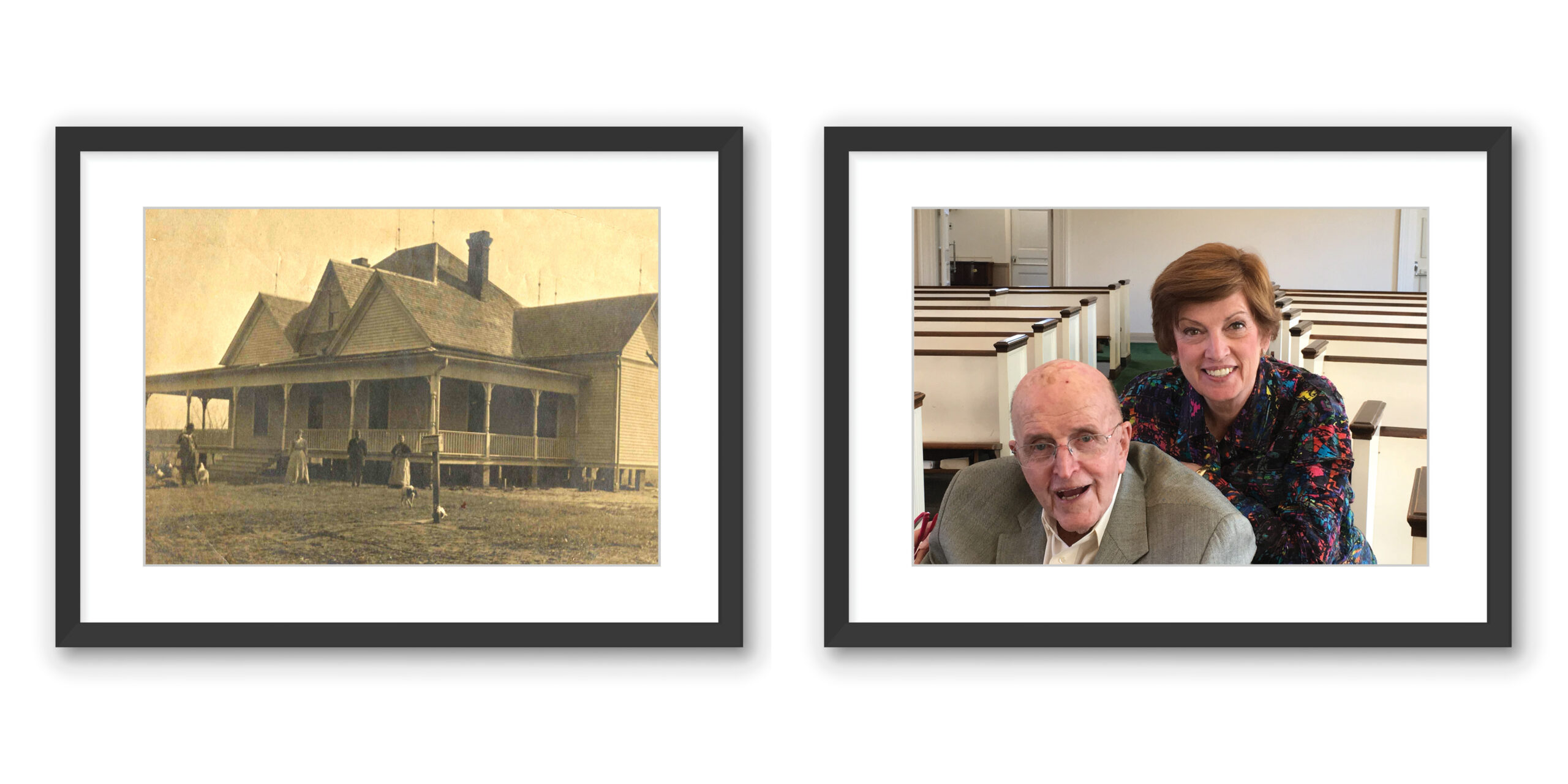
It’s difficult to find in Atlanta – one who was born and raised in the city with traits that reflect true southern charm, yet Carol May wears the tradition well. Her dignity, strength, and a delightful sense of humor are among the first things you notice in her company. Carol grew up not far from where she was born, near Emory University Hospital. She fondly describes her childhood home as her happy place. It was located at the corner of North Decatur Road and Ferndale, where a little stone path connected her home to her cousins’ house. It was a path well worn by the two families. Family was important to Margaret and Baxter Davis, and so was the church.
Carol and her family were faithful members of First Baptist Decatur. “I was baptized there, my sister Nancy and I were married there, and we held my parents’ funerals there,” she said smiling. As a child, her father served in several church leadership roles while her mother taught Sunday School. “We were there all the time,” she remembers, smiling again, as she thinks about taking part in Training Union with its sword drills and Girls’ Auxiliary with its Coronation Ceremonies.
After graduating from Briarcliff HS, she went to the University of Georgia and was later an administrator at Wesleyan College in Macon and Virginia Tech. Later, she earned her doctorate from the University of Alabama and was an administrator and instructor in the University of South Carolina system. After a divorce, she and her son Jim moved to Lilburn to be close to her sister and parents who had moved from Decatur while she was away. She quickly became involved in the community, volunteering at Parkview High School where Jim played football and wrestled. This set the stage for a teaching career that spanned nineteen years. Many friends in the community and former students know Dr. May as a retired teacher and adviser of the yearbook staff at Parkview. Few, however, know her as a family historian who carefully preserved the love story of grandparents she never knew.
James Baxter Davis, Carol’s father, grew up on a family farm in Locust Grove, Georgia. Born in March 1919, Baxter never knew his father who died in France during World War I, six weeks after his birth. His mother died when he was only nine. Consequently, he was raised by his maternal grandparents on the Kimbell homestead and eventually inherited the family farm. As he was preparing to sell the land, a unique discovery was made. Tucked away in a box that originally held a red-letter Bible were letters of correspondence between Eva Kimbell Davis and James Almond (J. A.) Davis. They were Baxter’s parents and Carol’s paternal grandparents. Written between 1913 and 1919, the letters chronicle Eva and J. A.’s love story, giving us a glimpse into WW I, their marriage, the birth of their son, and J. A.’s untimely death.
The letters remained in the farmhouse attic for seventy-two years before they were found and returned to Baxter. It wasn’t until after her father passed away that Carol returned to the letters and lovingly transcribed and compiled them into the book for her family and future generations to enjoy. Along with the letters, Carol included pictures and explanations of historical events for each year, copies of birth certificates, timelines, and images of a few original letters.
J. A. often signed his letters “With a bushel of love and a ‘tiss’” and so became the title of their love story.
On top of the red-letter Bible box, Eva wrote:
All the letters I received from J. A. while he was in camp at Gordon, Atlanta and France. I wouldn’t take a million dollars for them for they have been a source of great pleasure and comfort to me as well as a great treasure now.
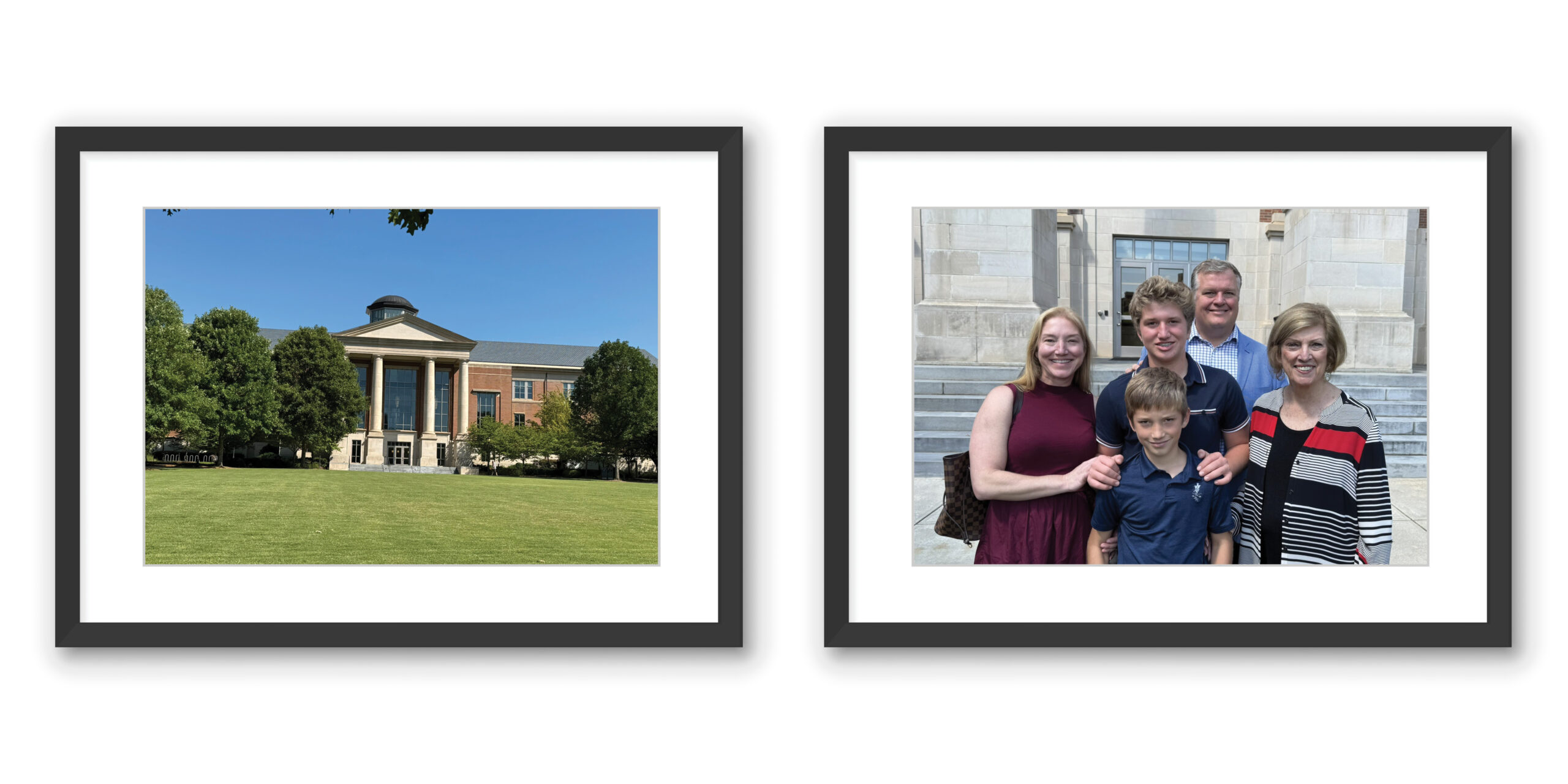
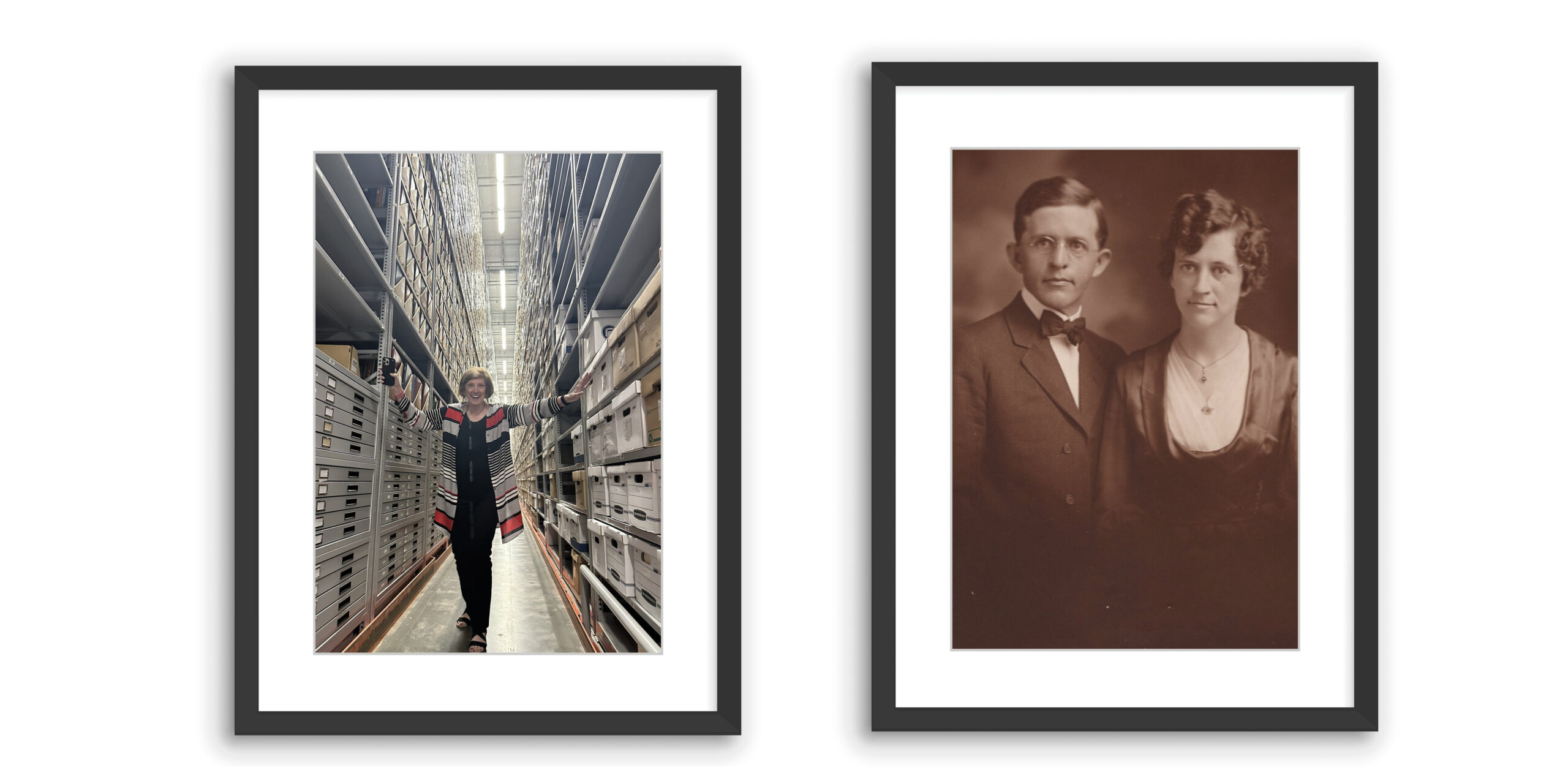
The project took more than a year to complete. Eventually, the letters were deeded to the University of Georgia, where they are currently archived in the Richard B. Russell Building for posterity. With a Bushel of Love and a “Tiss” is a heartwarming love story that captivates its readers from the first “Dear Mr. Davis, …!”
_____
A copy of Carol’s book can be found in the church library.