Our continued partnership with the Lilburn and NETWorks Co-ops.
by Jeremiah Hamby, Minister of Youth and Missions
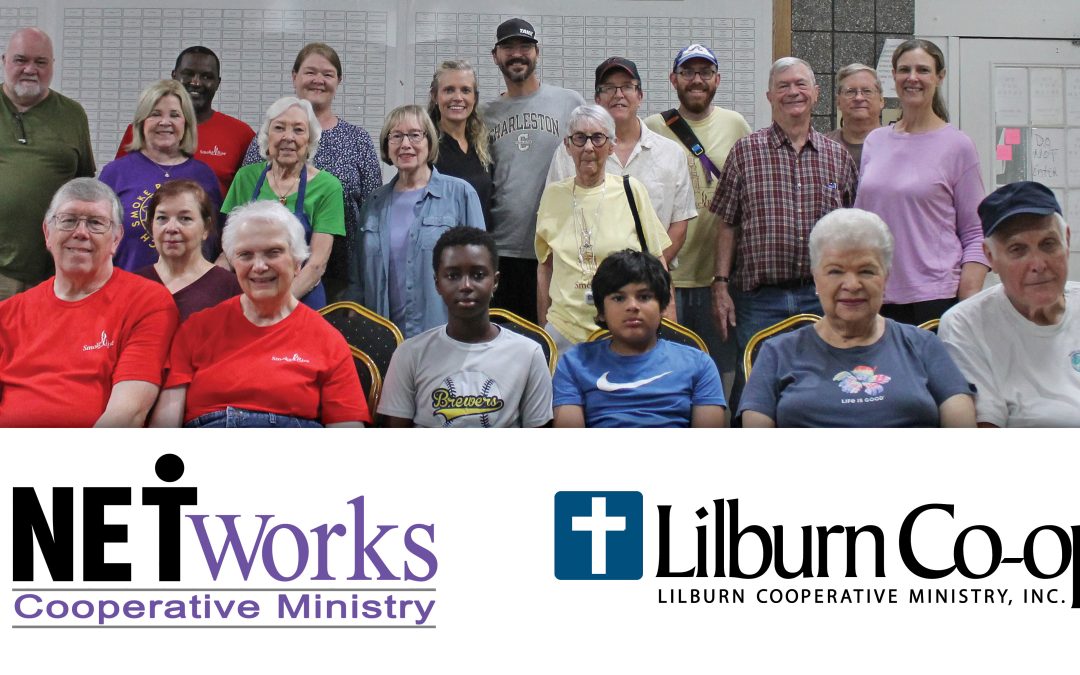
Every year, NETWorks Co-op in Tucker hosts a church partners luncheon where they gather together representatives of all the churches that support the co-op. A few weeks ago, I (along with my three-month old son, Silas) had the privilege of attending this year’s luncheon. As we entered the co-op, we were greeted warmly by friends and joined the growing group in their conference room. The room was already full with an additional table already set up to accommodate everyone. Around these tables were folks from all around the surrounding area and from different church traditions—Methodists, Episcopalians, Presbyterians, Catholics, and a couple Baptists to boot. All of us were there because we know how much need exists in our communities and we know that individually none of us can meet these growing needs. People from different churches and different traditions all coming together, all co-operating for hope.
I am proud to tell others that our church supports two local co-op ministries, NETWorks and the Lilburn Co-op. Both of these organizations provide a critical lifeline of hope for neighbors in our local community who find themselves struggling to make ends meet and are lacking basic needs for themselves and often their families. Each ministry serves a unique service area while providing similar resources. For example, NETWorks and the Lilburn Co-Op do not serve the same people. NETWorks serves exclusively Dekalb county within a boundary that goes from the county line with Gwinnett in the east to Clairmont Rd to the west and I-85 to the north and Stone Mountain Freeway to the South, with a small bubble just south of the freeway. These service areas are also generally broken up by postal code with the Lilburn Co-Op serving families and neighbors in the 30047, 30087, and the Gwinnett portion of the 30084 zip codes. This means that each co-op focuses on their immediate surrounding community and builds connections with partners in those neighborhoods.
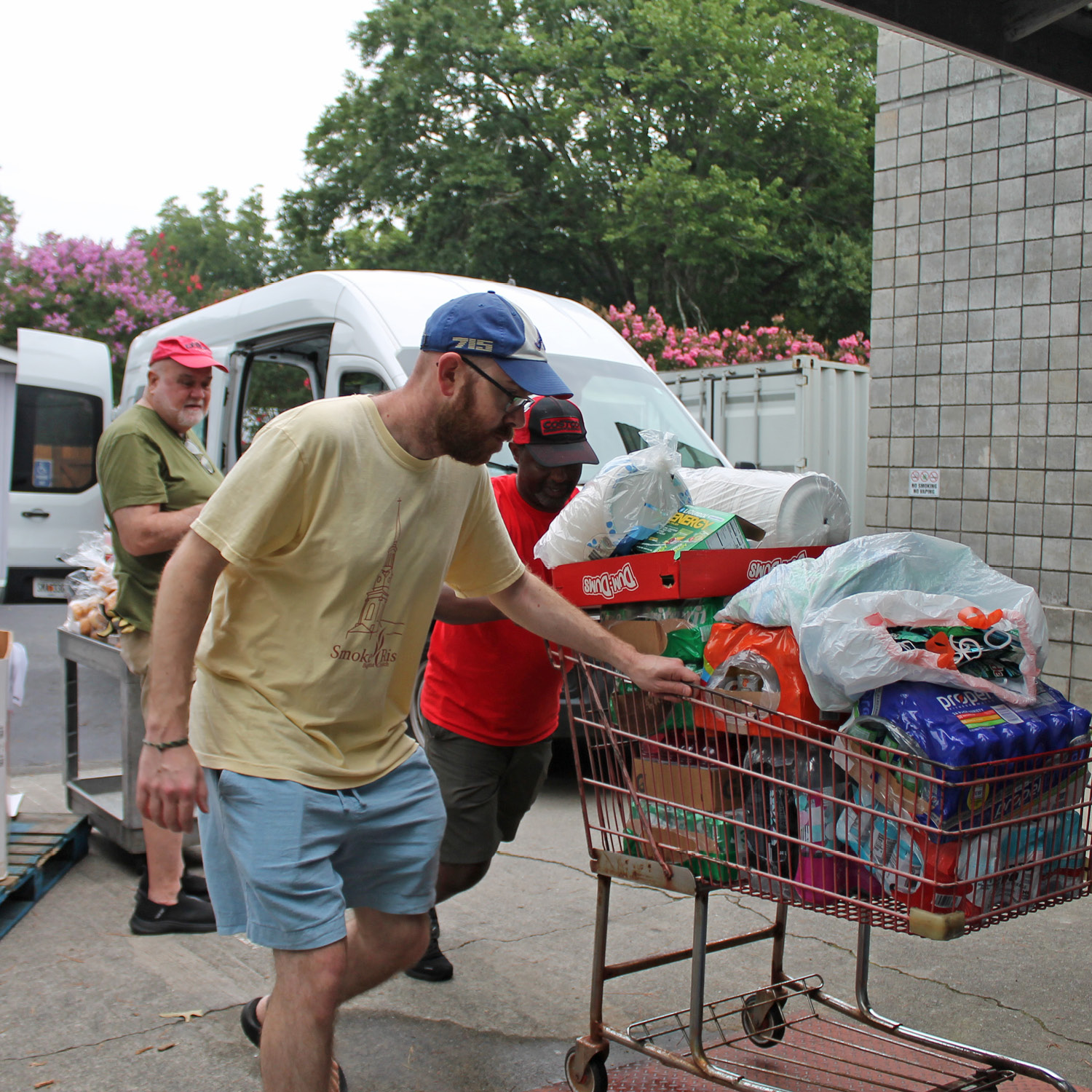
As a partnering congregation, we are one of those supporting connections! Throughout the year, you will see large, rolling garbage cans rotating around our Sunday school classrooms for food collections; you may read about a summer school supplies drive or you may join us for our annual Thanksgiving dinner and food bag packing event. Our missions budget includes funds designated for both co-ops, supported by our budget offerings, and some members also faithfully give designated gifts every month for the co-ops. Each of these are different ways in which we at Smoke Rise consistently come together to support these vital ministries in the communities around us.
In many cases, while we may never know the full effect our support has on our neighbors in need, you can be sure that every bit of what we do makes miracles possible. The other week while a group of us were serving at the Lilburn Co-op, Jackie told us about a mother who received one of the back-to-school backpacks with supplies we helped to collect. One day, they handed another mother one of those backpacks for her child. Almost immediately, the mother collapsed onto the floor in tears. She had worried and worried about how she would be able to provide her son with the basic supplies he needed for school. Money was tight for them. Life was uncertain. She desperately wanted her son to have what he needed, but did not know how she would be able to provide both school supplies and food. In that moment, while all her struggles and concerns had not been erased, she received a glimmer of hope in the fact that her son would have some basic supplies to start the school year.
These stories, and the many others that could be told by those who have served at the co-ops, together paint a picture of hope—for a world where neighbors care about neighbors, where the hungry are fed, and where God’s love is made known through hope in action. Over 50 percent of our Smoke Rise community lives within the service areas for these co-ops and many more live nearby, meaning that these partners are our immediate neighbors. I am so grateful for the many ways we support these ministries as a congregation. Whether it’s by connecting with one of these partners or serving in your own way, how might you too be a co-operator for hope in the world?